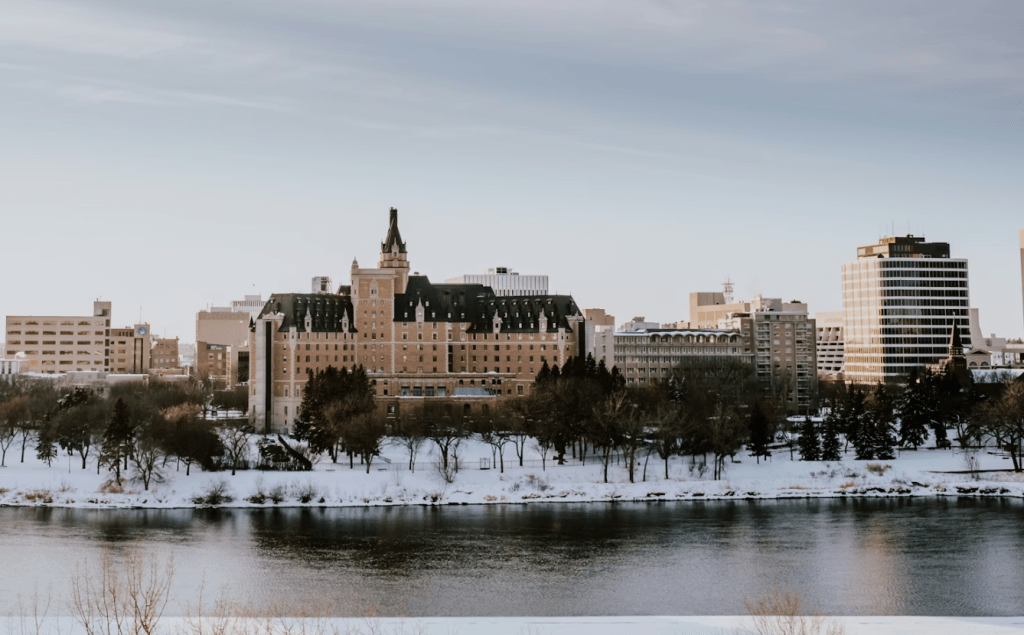
Joni Mitchell’s hometown is Saskatoon, Saskatchewan.
It could be anywhere in the whole world that this titan songwriter comes from and spent her early life.
But it’s Saskatoon: a small city in the Canadian prairies, where winter winds bring the experience of cold sometimes to -40 degrees celsius and where everyone you know is either part of a family of farmers somewhere in the recent generational line, or knows someone who is.
This is the city where you drive by the university’s farm on your way into downtown over one of the many bridges.
I have long been fascinated by this fact for deeply personal reasons: Saskatoon is also my hometown, where the same harsh winter winds used to hit my face also, and the sound-dampened quiet of this stretching season haunts me even while I look at palm trees outside my window in Southern California.
This piece is not a biographical account of Mitchell, and although speaking of some of my own reference points is unavoidable, it is not a piece about me and my work. It’s a gentle investigation into the formation of creative imagination, and how place plays a critical role in that process.
The Shared Memory of Songs Around the Campfire
I grew up with my mother playing guitar and singing songs, although to my memory Mitchell’s music never made an appearance. The first time I remember hearing a Joni Mitchell song was with everyone else worldwide in its Counting Crows/Vanessa Carlton re-imagined version in the early 2000s:
I persisted in not knowing it was her song for several years afterward.
But due in part to the songs I did hear on my mother’s guitar and stories of her early adulthood duet rendered moot by the early marriage of her singing partner, I grew up with a fascination with songwriting. I remember names like Simon & Garfunkel.
But what has stayed with me is that my mother played music because it’s what they did, around the campfire, in Saskatchewan summers.
Since slowly connecting the dots on the significance of Mitchell’s shared hometown and thus similar backdrop, I’ve often pondered how much of that exact Saskatchewan culture Mitchell would have also experienced, and how it may have shaped her own creative voice.
I have utmost respect for Mitchell. Her work is largely considered canonical in the singer-songwriting tradition with ample reason. From a young age, she was robustly creative and only grew more into that creativity as her career progressed, experimenting lyrically and musically with immense flexibility within the overarching folk genre.
But I also have occasionally inverted the thought; namely, that perhaps there is something about Saskatchewan that produces a Joni Mitchell, and that that same soil, that same harsh winter, that same unassuming backdrop of prairie plains is at the root of her world-transforming legacy.
This is never to usurp her unique genius; it is untouchable. But in the plainest, simplest way, it is obvious to me that where we come from forms us, and it matters.
Mitchell came from Saskatchewan, by her own claiming, and it’s impossible this did not affect her interior sensibility which would prove so significant on the world stage.
In Saskatchewan, the Cold Makes Us Who We Are
I moved back home for a little while in my twenties, and after coming inside from a brutal, bright January day, where the cold wind has sucked the air out of my mouth making breathing difficult, I remember immediately understanding a critical principle about this place where I had grown up:
The city wasn’t a good place in spite of the cold.
It was a good place because of the cold.
It is difficult, in a place where the air takes the oxygen straight out of your nose and mouth, to feel pretentious. It is difficult to take yourself too seriously when you have to pile on winter clothes to survive a thirty-second hop to the garbage can. It is very difficult to be hyper-independent when you viscerally understand, every time you go anywhere, that if something goes wrong with your car, you are at the mercy of extreme cold—and thus your neighbor.
We live in a sort of never-spoken mutually assured destruction.
In simpler terms?
We know we need each other.
I am still developing the significance of this reality for my own life as an artist, and how it affected my creative impulses. I’m curious to surmise more deeply as well how this may have shaped Mitchell, and thus countless songwriters after her.
There are so many second order effects as a result of this simple, immovable reality of the cold inside of which our courageous ancestors built a modern, comfortable life over decades of challenge and suffering. I look forward to thinking it through more deeply.
But it seems to me, especially in listening to various interviews with Mitchell or her different performances, how, regardless of how authentically she lived the prophetic role of a real artist in entertainment culture, with all of its gritty demands, she maintained a striking wholesomeness over time.
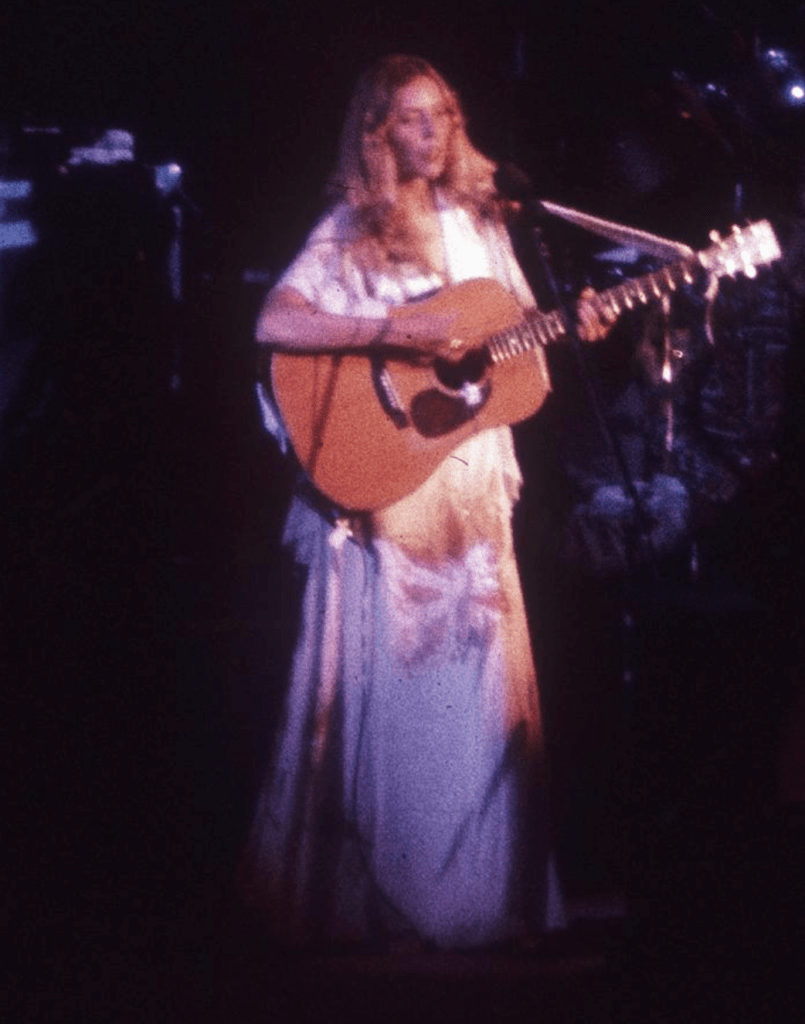
She suffered much, but it never destroyed her. She remained her own person, seemingly grounded in a way that evaded many others in entertainment.
I have felt something like this at my core throughout my own story, despite living all over the world, working in the music industry, and landing in Los Angeles. Saskatchewan is always with me. I believe it must be so for her also.
California, Too, As Contrasted Inspiration for Mitchell
California made its way emphatically into Mitchell’s songs also, as it tends to whenever a bright, young artist moves there to explore this creative metropolis.
(I am also no exception.)
But I think this as well owes some reference point to the memories of Saskatchewan permanently tattooed into our psyches, inescapably. We hear this contrast in a decisive way in Joni Mitchell’s song “River” from her Blue album which I sang here, where she longingly references frozen rivers in relation to her weariness with the entertainment world where it “don’t snow” and “stays pretty green:”
But the contrast shows up also in her repeated delight in the place.
There is a kind of appreciation one has for every place when one holds appreciation for any.
Although Mitchell has expressed in interviews some disenchantment with Saskatchewan and its residents she left behind, it’s impossible she didn’t retain a love for the place that formed her most profoundly.
This was the place where her seventh grade teacher challenged her to transcend the predictability of cliché; the place where she first sang live in order to pay for cigarettes; the place where she started putting words to music; and likely the place where she first loved, lost, and was working out who she would become like we all do in those formative years.
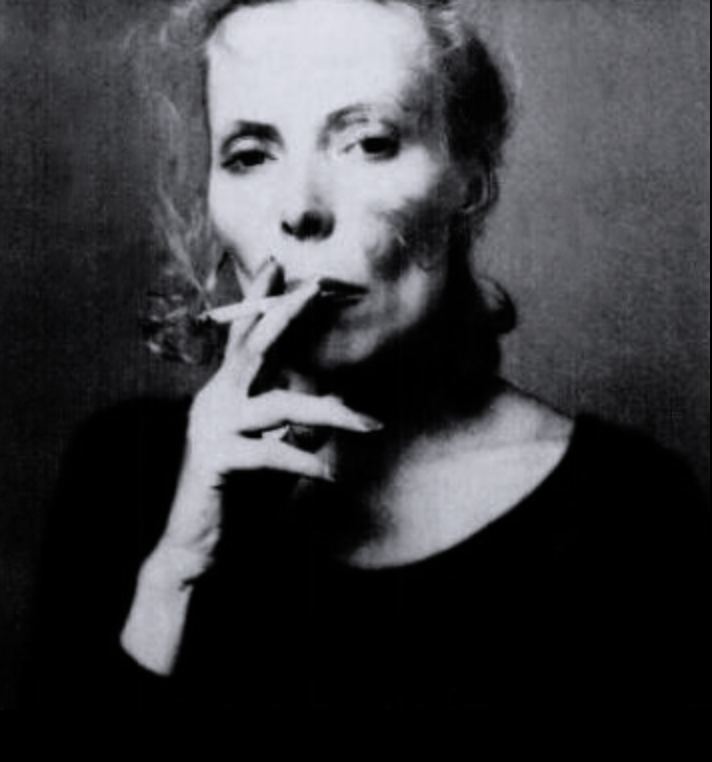
This love and the extreme contrast between Los Angeles and Saskatoon likely provided strong fodder for her impressive creative life, and has likely never left her. We do see a specific appearance of Saskatoon’s famous Bessborough Hotel silhouette by the South Saskatchewan river in her Clouds album cover self-portrait, long after she had left, so it’s not a stretch.
This “Land of the Living Skies” and My Own Memory
Reflections along these lines have formed the basis for my own deeper investigation into these questions as I work on an overarching body of work, supported by a few wonderful patrons.
I am endlessly fascinated by the themes of place and how our history and context forms and shapes us, especially as artists.
Mitchell’s presence in the backdrop of my life as a singer and songwriter, despite little direct influence in my own early artistic formation (for some reason I was more aware of the 1990s singer-songwriter tradition, even as a very young child at the time), has been of growing significance.
There seems an interesting parallelism to our lives spread across the world, but always with the core reality of Saskatchewan at the center. This is what I’m interested to grow and develop.
It will be beautiful to continue to develop my own work around these themes, always with a sense of immense gratitude to Mitchell’s legacy which has inspired so many—including those 90s women who inspired me.
We all come from somewhere, geographically and otherwise.
And it matters.
 beautyrebuild.com