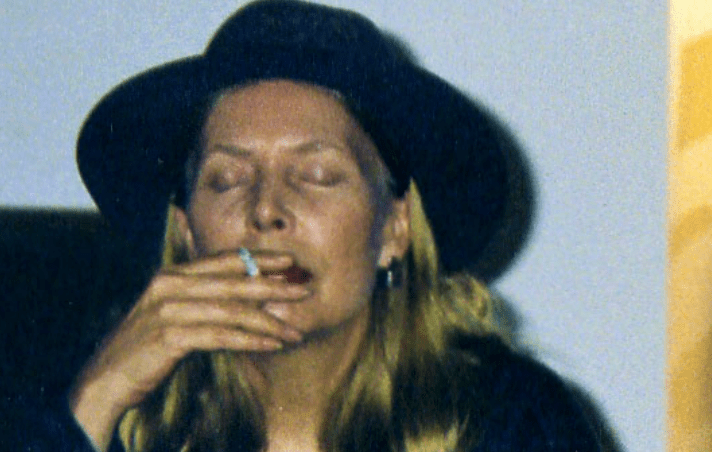
One of the great Joni Mitchell’s most famous songs, Both Sides Now, offers a simple invitation into an honest encounter with life and its varied experiences.
Because it rings true to experience in a way that Mitchell accomplished par excellence, eschewing vague poetic language in favor of a more visceral lyrical approach, several generations have remained fascinated with the track.
In a time of constant new music, and most of it algorithm-inspired bland, even the youngest listeners and writers continue to discover and value Mitchell’s work. She can easily be said to have been one of the main forces driving the best of music all up until and through the 1990s, and continues to inspire the now less but popular but necessary honest songwriting we find in rare corners.
The essence of the song, built around the main analogy of clouds which is also the title of the 1969 album where the song first appeared, is that depending on one’s perspective or the timing of events, life can look vastly different. Things that seem bright and beautiful can turn in an instant or be robbed of their joy; things that may not be ideal may turn out to be exactly what we needed.
In the end, because of this “win and lose” perspective over time, one comes to see how little we really know of anything:
I’ve looked at life from both sides now
From win and lose and still somehow
It’s life’s illusions, I recall
I really don’t know life at all
Although a playful song melodically, the melancholy of it is deep, as is a constant in most of Mitchell’s work. In truth, while one can infer that the inverse of being jaded by our initial joys is also true — that suffering can become the source of joy, or that disappointments can hold within them a precious, deeper treaure — Mitchell doesn’t formulate the song that way.
Fundamentally, one hears in the song, in the midst of a sage-like positioning, a shattered heart and the crumbling of innocence. She has, at the time of writing the song, discovered that being earnest and honest isn’t always received, that the feeling of romantic love often flickers and dies, and that although a childhood perspective of clouds is a nice, nostalgic memory, ultimately that perspective is simply an amalgamation of “illusions” that we occasionally recall.
One can’t view Mitchell’s songs properly without reference to a less-well-known but in some ways most fundamental track, Little Green, which remains one of my personal favorites.
It vaguely details the sad story of her becoming pregnant by a free-spirited man who expresses little interest in the child, feeling alone in trying to have and raise her as a young musician, and ultimately giving her up for adoption:
Born with the moon in Cancer
Choose her a name she will answer to
Call her green and the winters cannot fade her
Call her green for the children who’ve made her
Little green, be a gypsy dancer
He went to California
Hearing that everything’s warmer there
So you write him a letter and say “Her eyes are blue”
He sends you a poem and she’s lost to you
Little green he’s a non-conformer
While the song came out after Both Sides Now on her 1971 album Blue, she gave birth to her daughter in 1965. An experience like that transforms one’s entire life, and in Mitchell’s case, seems to have transformed also her entire body of work.
What we see in Both Sides Now is Mitchell coming to her audience with the wisdom of one who has suffered and who has come to understand the stark truth of human fragility and the sometimes capricious experience life seems to thrust upon us.
While hope is always warranted, which seems to flicker in the song despite the contemplative sadness of the lyrics, what Mitchell offers here is a sober look in the eyes of those who are still on the other side of the clouds—still happily living in illusion, unaware of the devastation and deflation that may await.
Her answer, it seems, is to accept that we don’t really know much no matter what we’ve experienced, and having a health resignation to that reality may be the best way forward into a decent life.
 beautyrebuild.com