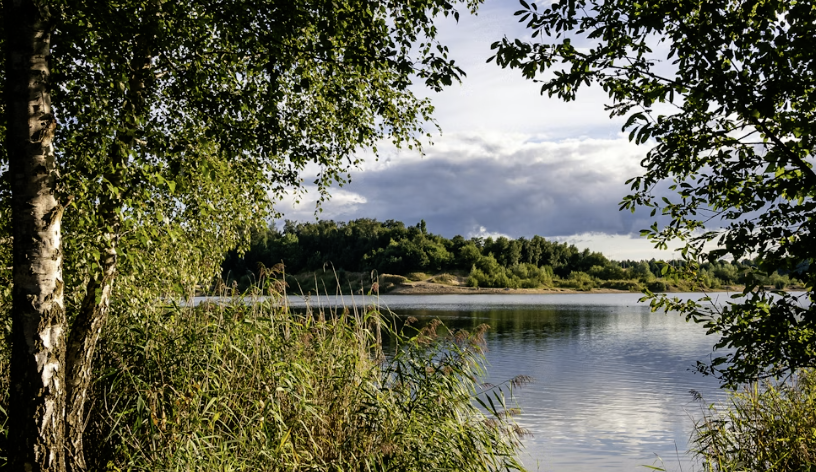
One of W. B. Yeats’ most well-known poems, “The Lake Isle of Innisfree,” is an important reminder of the deep needs of the human heart for solace, silence, peace, and natural beauty.
The poem articulates Yeats’ experience of a real place he remembered from childhood, in contrast to his bustling life in the city at the time of writing in 1888.
We can hear the poem in Yeats’ own voice, thick with his Irish accent, here:
He expresses his longing for this place and the peace it represents to him beautifully. The sound of the bees becomes “loud” in this sacred space, denoting the relaxed sensory baseline where the natural world, so often stifled and overpowered by modern life, can emerge as rich, textured, and even consuming.
One truly feels relaxation of senses, mind, and heart in allowing the natural environment to envelop the body:
I will arise and go now, and go to Innisfree,
And a small cabin build there, of clay and wattles made;
Nine bean-rows will I have there, a hive for the honey-bee,
And live alone in the bee-loud glade.
[…]I hear it in the deep heart’s core.
At the time of the poem’s writing, Yeats was experiencing the drain of modern life in London, where the “pavements grey” offered little comfort.
In this place modern fatigue, Innisfree crashes into the poet’s consciousness via memory, coming up from the deeps of his innocent childhood and inviting him back to that place, if not in reality, then within his deep inner world from which the memory springs.
In fact, we feel that it truly springs, that the cultivated inner life can be something of an eternal well out of which the purifying water of what is good and beautiful can quench a dry and exhausted soul.
The poem has been set to music countless times, this choral setting by Eleanor Daley, which I sang as a child, is particularly haunting:
We are collectively in time of immense cognitive demand on us via the now all-consuming online world. Yeats’ poem reminds us of our own need for simpler times and environments, particularly in the natural world, in order to bring us back to the “deep heart’s core.”
This inner place of ourselves is where we can access peace and a true sense of reality and ourselves within it, regardless of circumstance. But it must be cultivated via experiences that etch that reality into the fabric of our being, and regularly visited.
 beautyrebuild.com