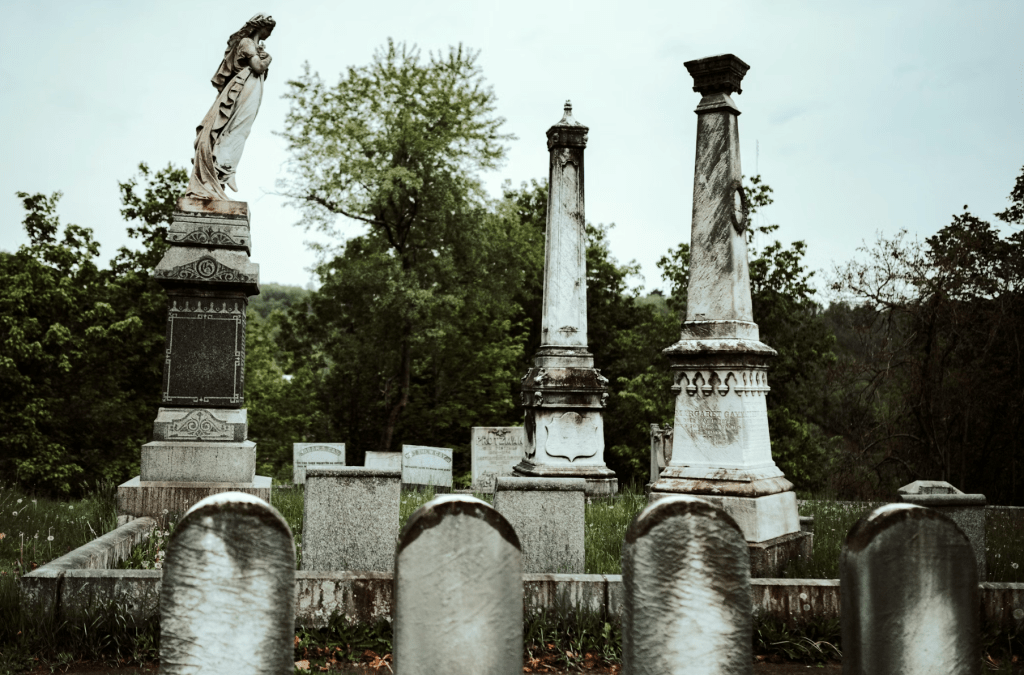
Emily Dickinson’s poem 449, referred to normally like all her poems by their first line, I Died for Beauty, is a profound statement of meaning about the calling to live for beauty—and the often perilous consequences of such a vocation.
In a way unique to Dickinson, whose life was marked by much suffering while she crammed poem after desperate poem into her bedposts, she captures the ache of so many hearts in living out what is real in a world that often seems to punish or ignore it.
In the poem, her main character is one who dies for beauty, now lying beside a similarly tragic figure who died for truth. In this similar fate, where, by the close of the poem, time ultimately “covered up their names,” they first experience the relief of a kinship and acknowledged unity of mission. But this mission comes with the distinctly quiet and sorrow-laden resignation of death, where Truth’s ambassador softly questions Beauty’s: “why I failed?”
‘Failed’ is a decisive word, as every word is in Dickinson and in the work of any great poet. Death, in the normal course of time, is not a failure but an inevitable reality. The word is sometimes used to refer the specific “failure” of an organ, but for the vocationally-driven lover of truth who appears in the poem, it carries a sorrowful grief of having been unable to stay alive, one assumes, in a world that doesn’t want it.
With beauty’s ambassador now laid beside him, the failure in both manifests as an existential rejection—the rejection countless many committed to the tireless work of the ideals experience throughout their lives. By the end, the reader is left with the image of moss slowly covering over even the faint remaining memory of their names, lost to the forgetfulness of time.
Of course, the blame of “failure” should fall squarely on the world that rejects the preciousness inherent in these transcendentals and those who fight to illuminate them—but it is those who live for these ideals who feel the weight and despair of a distracted world, rather than those who miss them entirely.
As with much of Dickinson’s poems, she expertly expresses the intimate experience of a broken heart trying to speak itself out to a shallow world—of those desperate to drink and share clear water, who instead find themselves swallowing dry ash in isolation.
It begins and closes with the finality of death, as is often the case for Dickinson:
I died for Beauty – but was scarce
Adjusted in the Tomb
When One who died for Truth was lain
In an adjoining Room –
…
Until the Moss had reached our lips –
And covered up – our names –
We can’t usually go to Dickinson for a revival of hope. But there is remarkable peace and solace in her articulation of suffering.
Her work remains critical consolation for those beholden to interior pain and sensing a calling to live for ideals, despite the cost—despite perhaps having to “die” in varied ways for these ideals.
 beautyrebuild.com